
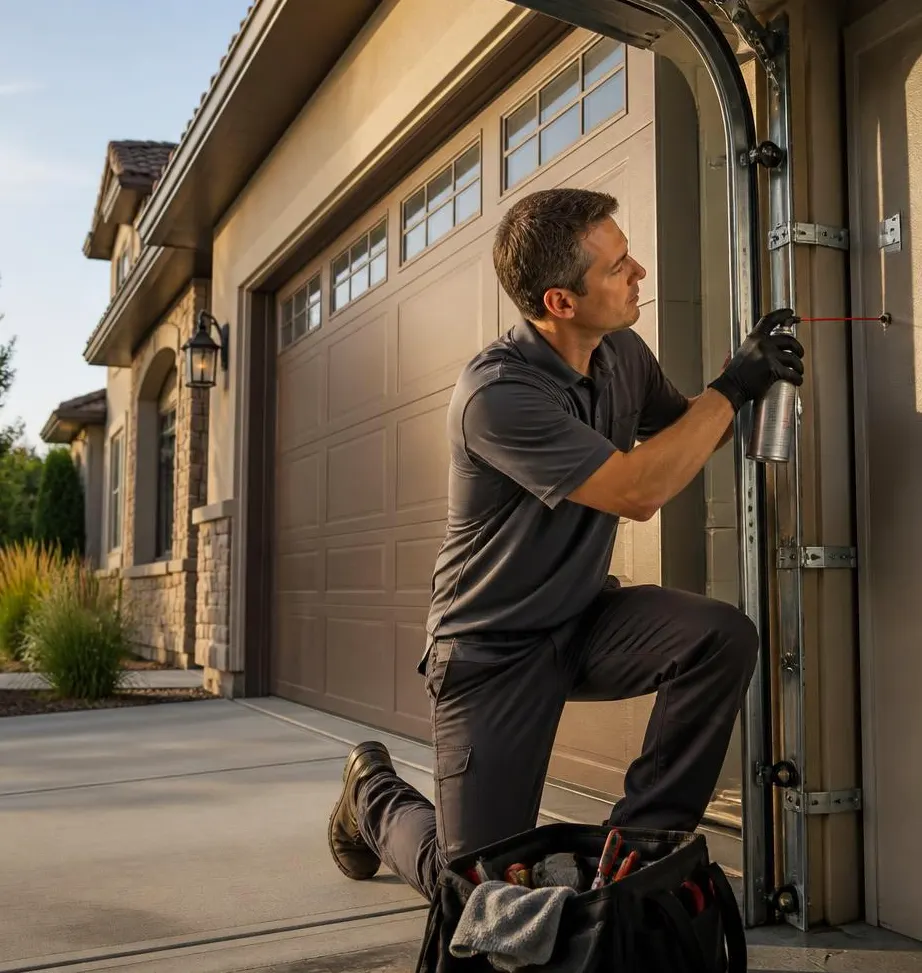
What a Technician Sees After a Windy Night
The call usually comes in the morning after a rough night of wind and rain. A homeowner walks out to the garage and finds a panel bowed inward, rollers popped out of the track, or the bottom seal torn loose with a puddle of water pooled just inside the door. Sometimes the opener's rail has pulled away from its bracket because the door slammed hard against the track during a gust. None of this looks catastrophic at first glance, but it's usually a sign the door took on more pressure than it was built to handle.
Why the Garage Door Is a Home's Weakest Wall
A garage door is the largest moving opening in most houses, and it is also the least reinforced section of exterior wall. A standard door simply isn't built like a load-bearing wall section ─ it's a set of hinged panels riding on thin tracks, held up mostly by torsion springs and a handful of roller brackets. When high wind pushes against a closed garage door, it's pushing against the flattest, least braced surface on the house.
If that door fails and wind gets inside the garage, the pressure doesn't just stay contained. It pushes up against the garage ceiling and out against the walls, which is part of why garages are so often the first part of a home to show structural damage after a serious wind event. A door that bows, buckles, or comes off its track isn't just an inconvenience ─ it's a breach in the building envelope.
Why This Matters Right Now in Sumner County
Fall in this part of Tennessee brings its own mix of hazards. Remnants of tropical systems often track inland and bring heavy rain and sustained gusty wind well after hurricane season has technically ended along the coast. That's followed, later in the season, by occasional ice storms that bring their own problems ─ frozen tracks, stiff springs, and ground movement that can shift a garage slab just enough to throw off door alignment. Add in the pine trees and persistent moisture common around garages in this area, and you've got a recipe for rust on hardware, swelling in wood jambs, and seals that fail right when you need them most.
None of this requires a brand-new door to manage. Most of it comes down to maintenance most homeowners never think about until something breaks.
Concrete Steps to Prepare the Door for Storm Season
- Tighten all hardware. Track bolts, hinges, and roller brackets loosen gradually from everyday vibration. A door with loose hardware has far less resistance to wind load and is more likely to come off-track during a gust.
- Check the bottom panel and corners for rust or rot. This is where water pools after heavy rain, especially if pine needles and debris have clogged the drainage path near the slab. Soft wood or rust here weakens the whole panel's ability to hold its shape under pressure.
- Consider a horizontal strut reinforcement. Retrofit kits add a horizontal bar across the back of the door panels, which significantly increases resistance to wind pressure without requiring a full door replacement. If you're due for a new door anyway, ask about wind-rated options built with this bracing already in place.
- Replace worn weatherstripping and the bottom seal. A torn seal doesn't just let in bugs and drafts ─ during wind-driven rain, it's the main point where water gets pushed into the garage.
- Add battery backup to the opener. Power outages are common during both wind and ice events. A battery backup means you're not stuck trying to manually operate a heavy door in the middle of a storm.
- Know how to use the manual release. If the opener loses power while the door is down, you should be able to disconnect it and operate the door by hand without forcing anything.
- Clear gutters and downspouts near the garage. Standing water against the door's bottom edge accelerates rust and rot, and it's one of the most preventable issues in this climate.
When to Call Gallatin Door & Opener
If a panel is visibly bowed, the door is off-track, or the bottom seal is torn and letting water in, it's worth having it looked at before the next storm system comes through rather than after. Our Preventive Maintenance service covers the hardware inspection, lubrication, and alignment checks that catch loose rollers and worn seals before they turn into a mid-storm failure. If a spring has already started to show rust or the door feels heavier than it should when opening manually, that's a job for our Spring Replacement service ─ a corroded spring is far more likely to snap under the added strain of wind load, and it's not something to wait on.
We've worked on garages across Gallatin, Hendersonville, Portland, White House, Goodlettsville, Westmoreland, Millersville, and Castalian Springs, and the same seasonal patterns show up in all of them: loose hardware, water damage at the base, and seals that didn't survive the humidity.
If your garage door hasn't been checked since last season, now's the time. Call Gallatin Door & Opener for honest, dependable garage door service in Gallatin, TN and the surrounding Sumner County area before the next round of fall storms rolls in.